I took the name "Compa'i, Compa'i" from Compay Segundo, the Cuban troubadour whose work as a musician spanned the better part of 80 years.
I'm thinking now of Celia Cruz, Compay Segundo, Frank Sinatra. I've always admired that kind of tenacious career longevity, and those kinds of irrepressible personalities, larger than life, but firmly rooted in what they love to do. And I want that story too.

Friday, July 6, 2007
A Note on the Blog Title

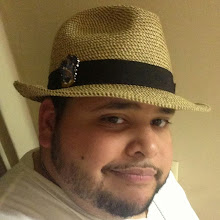 Rich Villar is the author of the poetry collection Comprehending Forever (Willow Books, 2014). He directs Acentos, an organization fostering audiences and community around Latino/a literature, and he has been quoted on Latino literature and culture by The New York Times and the Daily News.
Tuesday, July 3, 2007
Coda: Why Poetry is Not Sal's Famous
First: If you haven't seen Do the Right Thing, see it, then reread this post. It might make more sense.
 Now then. Don't get it twisted. When it comes to erasing the margins, I'm down to bust a couple of metaphorical windows, burn some shit down. Politeness never got us anywhere, as June Jordan eloquently reminds us.
I've heard tell of Black and Latino writers being reticent to submit their work to certain journals and anthologies, because they represent something of an insidious system...a bell hooks-ian white supremacist kind of system. Of course, who am I to disagree with bell hooks? Hell, anyone who's seen "Sicko" can attest to the fact that the good-ol-boy structure is definitely alive and well. But what's the proper response to a system that spits us out? Do we threaten to burn down the academy until they put some Black people on the wall? Do we boycott the Oscars until they give Pedro Infante a lifetime achievement award?
OR...am I Black enough/Latino enough/Chicano enough, to complain on your behalf? (Now THAT would be an interesting argument, wouldn't it?)
Here's the bottom line, as I see it. When you write well enough to be noticed, when you build the proper coalitions on your own, and when you create for yourself a voice...one that is undeniable and unassailable...YOU become the institution.
It all comes down to what institution you want to fight, and what particular mission that institution entails. A publication like Poetry has a pretty broad mission, I'd say. I mean it's right in the title: poetry. Big concept, but not without risks. The question for the poet is this: How much more legitimacy would the institution lose if it didn't publish/recognize YOU? In the long run, can Poetry afford to pass you up? Imagine if an entity like Poetry had left out Gwendolyn Brooks. You could safely use it for toilet paper. If the same can be said about your work twenty years from now, who then has the power to legitimize and de-legitimize? The answer, o seeker of power, is you.
Poets: Do the right thing. SUBMIT YOUR DAMN WORK. Don't let somebody tell you that your shit is no good for "a certain kind" of magazine. Cultivate that voice. Write your shit down. Show them who you are, by making them read your work...or making them trash it...at their own peril.
And well. If anything. There's always a garbage can nearby.
Rich Villar is the author of the poetry collection Comprehending Forever (Willow Books, 2014). He directs Acentos, an organization fostering audiences and community around Latino/a literature, and he has been quoted on Latino literature and culture by The New York Times and the Daily News.
Monday, July 2, 2007
Summing Up the Chatter: Two Funerals and Latino Poetry in the Balance
I don't remember speaking to any of the bereaved at the Pedro Pietri's wake in 2004. I very well may have, but I simply don't remember. I'm sure they were there, and I'm sure they were sad, but bereaved is not the proper word to describe the people at this particular wake.
We arrived at the People's Church on 110th and Lexington, greeted by drums and singing courtesy of the Welfare Poets. I was in awe of the sheer number of people there, and by what some might perceive as a lack of decorum. The crowd flowed in and out, the church itself was packed, kids were running around, and the conversation was a downright din. It was less funeral mass than rock concert, less wake than convention floor. I stood agape, interrupted by the occasional whisper: "I think I saw Pablo Guzman." "Dude, was that Geraldo?"
Of course, anyone who knew Pedro understood that he had a sense for the bizarre, and people genuinely loved him, so of course his wake wasn't going to be traditionally downbeat and morose. It was an event, a family reunion for Barrio residents, friends of the poet, and admiring fanboys like me.
And why? Pietri was not a celebrity, a singer, a politician. He wasn't a household name, and truthfully, he wasn't even that well-known amongst other poets. Why this funeral, why this turnout? Why the stumbling press coverage here in New York in the days that followed his death?
Because some people were late to the party, that's why.
Pedro Pietri told the truth about the American life in the days before the Puerto Rican Day Parade went national. He was involved with the Young Lords, during a tumultuous time in New York City's history, when Puerto Ricans and other minority groups had to fight for basic rights, and for every crumb of city services (including sanitation). He wrote and performed his work for 30 years as the poet laureate of the Nuyorican movement, never far away from his people and homes on the Lower East Side and El Barrio. He preached the gospel of the first draft—that is, the poet reads his/her first draft in public fearlessly, and edits from there.
Pedro was beloved. Not by U.S. literary critics, mind you—most of them haven't caught on to the existence of ANY Latino poets, much less a Puerto Rican poet from East Harlem. But his people—my people—adored him, both for the warrior he was within the community, and for the tireless supporter he was for younger writers. We didn't need anyone to tell us that he was our example. We knew it.
****************************************
I've been involved recently in a series of online discussions about the myths and realities surrounding what it means to be a "Latino poet." Some of the conversations were interesting. Some of them were heavily nuanced, parsing out the definitions of Latino, Latina, etc. Some of them have been displays of sheer ignorance on the part of people who should know better. But much of the debating and such have revolved around one concept: the systematic and undeniable exclusion of Latino and Latina poets from the U.S. poetic canon. In other words, pick up any random poetry mag or anthology, and the chances of finding a Latino in it are slim to none.
My partner, who is really adept at slicing through bullshit, took me to task about why I even bothered with these discussions in the first place. At first, they were fruitful, if only for the fact that writers were being introduced to other writers and other theories. But as these things tend to go, the talks fizzled into longer and longer posts and comments about nothing in particular, and that's unfortunate...and ultimately, a waste of unpaid time. (Of course, irony thy name is Rich: here I am posting about this to my own blog.)
She was right, of course, but she also got me thinking. All things considered, yes, Latino poets are often not part of the big "poetry conversation" in America. There are reasons for this: linguistics, culture clash, publishing prejudices, niche marketing. Plus, your good old-fashioned racism. Valid, sure. But what I've gleaned from these various conversation is this: When you die, the meaning of your life will not be found on the tongues of academes, but on those of the people you write for.
One funeral I was not able to attend was that of Gwendolyn Brooks. Though she died in 2000, she is mentioned in the same breath as Phyllis Wheatley, Sterling Brown, Langston Hughes. Rightfully so. But I'm not so sure her greatness lies in the fact that she is canonized in U.S. poetics. Ask the average young African-American who Gwendolyn Brooks is, and if he/she knows her, then that person can probably recite "We Real Cool" to you. Ask that person's PARENT, and the parent can probably recite more. Gwendolyn Brooks wrote no love poems for her critics, no odes for Poetry magazine, no sonnets to The Chicago Sun-Times. And while it's important to note her famous ties to Black institutions like Broadside and Third World Press, it was HER work, the poet's voice, that made the institutions legitimate, not the other way around. And why? Because Black people loved her, love her still, before anyone else caught on. It's the same with Pedro Pietri, even if no one catches on. It's the same with all the poets who came before us, whether they got their due or not.
Yes, it is our right and duty to point out the destructiveness of exclusion, whether you're talking literature or social justice. But I think that writers of Latino descent have a greater responsibility, an immediate need, to function as the storytellers and scribes of their communities, wherever they find themselves. They have lives to live outside the books and anthologies, and they have work to do which legitimizes them as human beings, first and foremost. To whatever extent that the universities, literary programs, presses, non-profits, etc., can lay claim to defining U.S. literature, they can only do so because the poets give them permission. When the ivory towers get the story wrong (as they often do), then the poets themselves should pick up the slack and write those stories themselves.
I'm confident that the stories will be told, and I'm confident that I'll be doing my share to build the institutions we need, in honor of Pietri, Brooks, and everyone else whose lives lifted the stones.
P.S. EVERY MAN, WOMAN, AND CHILD IN AMERICA TODAY NEEDS TO SEE SICKO, MICHAEL MOORE'S NEW DOCUMENTARY. This is no exaggeration. This is a monumental film, one that will open eyes, Republican or Democrat, black or white, Liberal or Conservative.
We arrived at the People's Church on 110th and Lexington, greeted by drums and singing courtesy of the Welfare Poets. I was in awe of the sheer number of people there, and by what some might perceive as a lack of decorum. The crowd flowed in and out, the church itself was packed, kids were running around, and the conversation was a downright din. It was less funeral mass than rock concert, less wake than convention floor. I stood agape, interrupted by the occasional whisper: "I think I saw Pablo Guzman." "Dude, was that Geraldo?"
Of course, anyone who knew Pedro understood that he had a sense for the bizarre, and people genuinely loved him, so of course his wake wasn't going to be traditionally downbeat and morose. It was an event, a family reunion for Barrio residents, friends of the poet, and admiring fanboys like me.
And why? Pietri was not a celebrity, a singer, a politician. He wasn't a household name, and truthfully, he wasn't even that well-known amongst other poets. Why this funeral, why this turnout? Why the stumbling press coverage here in New York in the days that followed his death?
Because some people were late to the party, that's why.
Pedro Pietri told the truth about the American life in the days before the Puerto Rican Day Parade went national. He was involved with the Young Lords, during a tumultuous time in New York City's history, when Puerto Ricans and other minority groups had to fight for basic rights, and for every crumb of city services (including sanitation). He wrote and performed his work for 30 years as the poet laureate of the Nuyorican movement, never far away from his people and homes on the Lower East Side and El Barrio. He preached the gospel of the first draft—that is, the poet reads his/her first draft in public fearlessly, and edits from there.
Pedro was beloved. Not by U.S. literary critics, mind you—most of them haven't caught on to the existence of ANY Latino poets, much less a Puerto Rican poet from East Harlem. But his people—my people—adored him, both for the warrior he was within the community, and for the tireless supporter he was for younger writers. We didn't need anyone to tell us that he was our example. We knew it.
****************************************
I've been involved recently in a series of online discussions about the myths and realities surrounding what it means to be a "Latino poet." Some of the conversations were interesting. Some of them were heavily nuanced, parsing out the definitions of Latino, Latina, etc. Some of them have been displays of sheer ignorance on the part of people who should know better. But much of the debating and such have revolved around one concept: the systematic and undeniable exclusion of Latino and Latina poets from the U.S. poetic canon. In other words, pick up any random poetry mag or anthology, and the chances of finding a Latino in it are slim to none.
My partner, who is really adept at slicing through bullshit, took me to task about why I even bothered with these discussions in the first place. At first, they were fruitful, if only for the fact that writers were being introduced to other writers and other theories. But as these things tend to go, the talks fizzled into longer and longer posts and comments about nothing in particular, and that's unfortunate...and ultimately, a waste of unpaid time. (Of course, irony thy name is Rich: here I am posting about this to my own blog.)
She was right, of course, but she also got me thinking. All things considered, yes, Latino poets are often not part of the big "poetry conversation" in America. There are reasons for this: linguistics, culture clash, publishing prejudices, niche marketing. Plus, your good old-fashioned racism. Valid, sure. But what I've gleaned from these various conversation is this: When you die, the meaning of your life will not be found on the tongues of academes, but on those of the people you write for.
One funeral I was not able to attend was that of Gwendolyn Brooks. Though she died in 2000, she is mentioned in the same breath as Phyllis Wheatley, Sterling Brown, Langston Hughes. Rightfully so. But I'm not so sure her greatness lies in the fact that she is canonized in U.S. poetics. Ask the average young African-American who Gwendolyn Brooks is, and if he/she knows her, then that person can probably recite "We Real Cool" to you. Ask that person's PARENT, and the parent can probably recite more. Gwendolyn Brooks wrote no love poems for her critics, no odes for Poetry magazine, no sonnets to The Chicago Sun-Times. And while it's important to note her famous ties to Black institutions like Broadside and Third World Press, it was HER work, the poet's voice, that made the institutions legitimate, not the other way around. And why? Because Black people loved her, love her still, before anyone else caught on. It's the same with Pedro Pietri, even if no one catches on. It's the same with all the poets who came before us, whether they got their due or not.
Yes, it is our right and duty to point out the destructiveness of exclusion, whether you're talking literature or social justice. But I think that writers of Latino descent have a greater responsibility, an immediate need, to function as the storytellers and scribes of their communities, wherever they find themselves. They have lives to live outside the books and anthologies, and they have work to do which legitimizes them as human beings, first and foremost. To whatever extent that the universities, literary programs, presses, non-profits, etc., can lay claim to defining U.S. literature, they can only do so because the poets give them permission. When the ivory towers get the story wrong (as they often do), then the poets themselves should pick up the slack and write those stories themselves.
I'm confident that the stories will be told, and I'm confident that I'll be doing my share to build the institutions we need, in honor of Pietri, Brooks, and everyone else whose lives lifted the stones.
P.S. EVERY MAN, WOMAN, AND CHILD IN AMERICA TODAY NEEDS TO SEE SICKO, MICHAEL MOORE'S NEW DOCUMENTARY. This is no exaggeration. This is a monumental film, one that will open eyes, Republican or Democrat, black or white, Liberal or Conservative.
Rich Villar is the author of the poetry collection Comprehending Forever (Willow Books, 2014). He directs Acentos, an organization fostering audiences and community around Latino/a literature, and he has been quoted on Latino literature and culture by The New York Times and the Daily News.
Subscribe to:
Posts (Atom)